
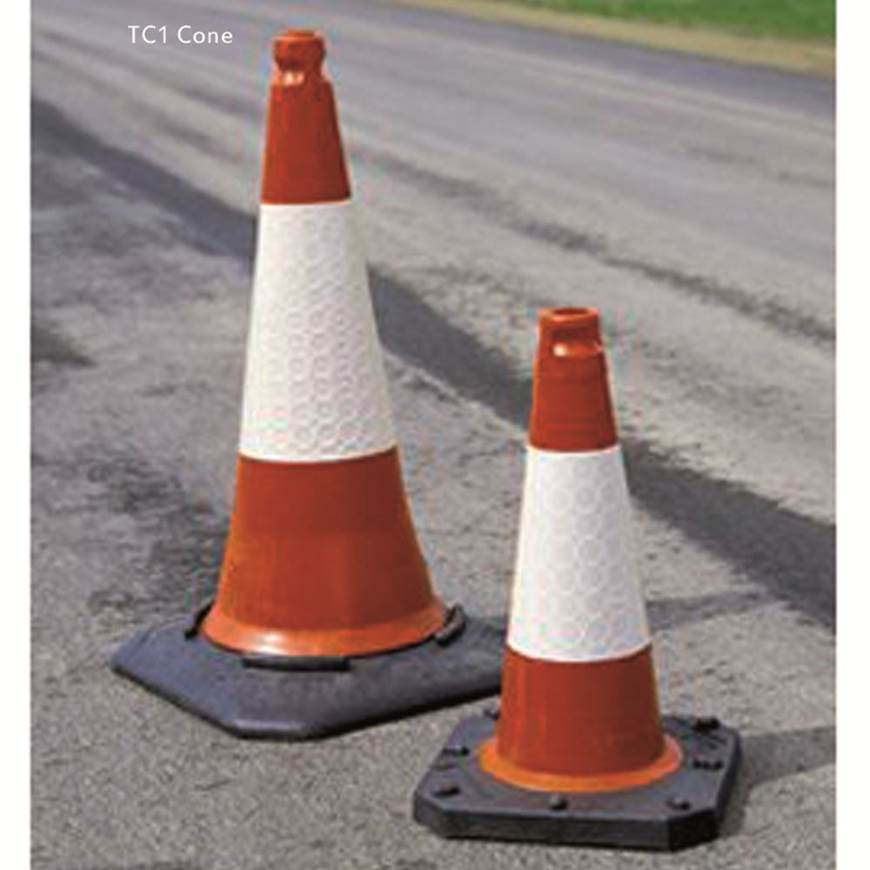
Helping us navigate roadworks. Keeping us safe from potholes and other hazards. Often going walkabout on a student night out. Traffic cones are everywhere. While the humble traffic cone is often thought of as pretty ordinary, there are plenty of fun facts about this fixture of our daily lives that we’re betting you never knew.
Fun facts about traffic cones
They were originally made of concrete and wood
Yes, that’s right. Before the plastic cones we know and love today, concrete and wooden versions existed. No official patent exists, but some sources suggest that these early versions appeared in New York in the early 1900s. Due to the fact they were hard to move (and damaging to crash in to!), by the 1950s, manufacturers started producing rubber, then plastic cones, which were lightweight, stackable, and much less damaging on impact.
There are around 140 million traffic cones in use worldwide
That’s an awful lot of cones directing us and keeping us safe. They really are the unsung heroes of road safety.
There’s a Guinness World Record holder who collects them!
We’ve heard of people collecting all sorts of weird and wonderful things, but traffic cones? David Morgan from Burford owns over 500 cones, including 137 completely unique types. His collection includes rare finds like a 1956 Lynvale rubber cone from Scotland and an unusual Malaysian cone that washed up on a beach off the Isles of Scilly. Wonder where he stores them all?
The UK once had a ‘cone hotline’
In the 1990s, the then Prime Minister John Major set up a hotline that people could call to report unnecessary traffic cones on roads. Not surprisingly, it was widely ridiculed and probably not the best use of time or taxpayer’s money.
One man’s plastic cone is another man’s art
Greek artist Yiannis Nomiko has done some incredibly detailed illustrations on traffic cones, turning them from simple road markers to Instagrammable pieces of art. The cones he decorates feature city landscapes and everyday moments, creating street art that literally stops traffic.
Ever heard a traffic cone scream?
In 2013, the Highways Agency tested “intelligent” traffic cones that could detect accidents and warn road workers of danger by emitting a loud alarm when a vehicle crossed into a restricted area. The cones were part of the Safelane project, which aimed to improve road worker safety by using wireless sensors to trigger alerts. The system also sent automated text alerts to supervisors and could activate variable message signs to warn drivers. Although they were successfully tested, they were not widely adopted due to cost and reliability issues.
Seattle has an 18-foot-high traffic cone monument
The city of Seattle is home to an art installation, featuring five giant fiberglass traffic cones. Created by artist Dennis Oppenheim, they were displayed at the Olympic Sculpture Park and have been exhibited in other places like Park Avenue in Manhattan. Well, making them that big is one way to stop people stealing them!
We hope you enjoyed our fun facts, and that next time you see a traffic cone, you’ll think of it as more than just a piece of plastic. For more interesting articles on road safety and traffic management, check out the rest of our blog or take a look at some of our best selling traffic cones!